Why pre-1980s glazed earthenware drains fail across West Auckland
Across West Auckland—particularly in established suburbs developed between the 1920s and late 1970s such as Titirangi, Glen Eden, New Lynn, Henderson, Green Bay, Kelston, Te Atatū South, Sunnyvale, Oratia and Laingholm—tens of thousands of residential and light commercial properties still rely on original salt-glazed earthenware (vitrified clay) underground drainage. Before flexible uPVC drainage pipework became standard under New Zealand plumbing regulations in the late 1970s and early 1980s, glazed clay was the primary material used for both foul water sewer laterals and stormwater lines. While the vitrified ceramic barrel of an earthenware pipe is inherently resistant to household wastewater corrosion, the structural Achilles' heel of every clay drainage system lies in its rigid segmental construction.
Unlike modern PVC pipelines extruded in long, flexible 6-metre lengths with elastomeric ring-seal joints, historical earthenware drains were laid in short 600mm to 900mm spigot-and-socket sections. Installers sealed each collar by packing hemp or oakum into the annulus and trowelling a rigid sand-and-cement mortar fillet around the joint. Consequently, a typical 18-metre house drain running from a gully trap in Henderson or New Lynn to the Watercare boundary connection contains between 20 and 30 individual mortar joints. Over four to seven decades of service, mortar collars undergo calcium leaching, shrinkage cracking and brittle fatigue, turning a continuous drain into a chain of rigid ceramic segments with unsealed gaps.
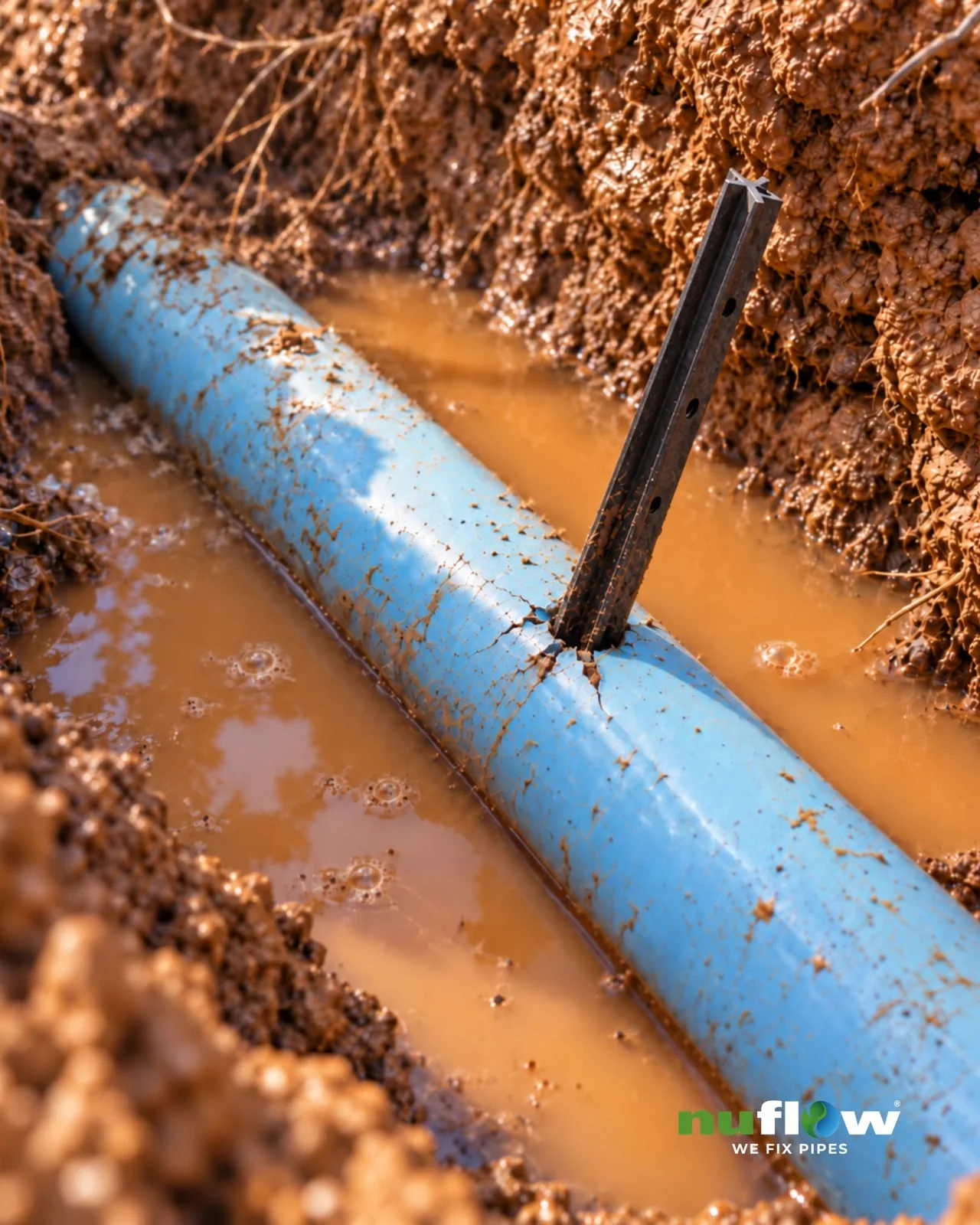
In West Auckland, this mechanical vulnerability is compounded by regional geotechnical conditions. The underlying Waitemata Group geology weathers into reactive, high-plasticity alluvial and foothill clays across the Waitākere foothills and western urban basin. During wet Auckland winters, these clay soils absorb moisture and swell; during dry late-summer periods, the ground desiccates and shrinks. This seasonal shrink-swell cycle subjects buried drains to differential vertical settlement and lateral shear forces. Because salt-glazed clay has almost zero flexural elasticity, soil movement snaps rigid mortar collars, creates dropped inverts ('lipping') where one pipe segment settles lower than the next, and triggers longitudinal crown cracks and circumferential ring fractures.
Waitākere bush corridors, root intrusion and the cycle of recurring blockages
Once a mortar collar cracks or a clay socket pulls slightly apart in shifting West Auckland clay, the joint begins leaking trace moisture vapour and nutrient-rich wastewater into the surrounding soil. Across heavily vegetated suburbs such as Titirangi, Oratia, Laingholm, Waiatarua, Swanson, Green Bay and Konini, established native trees (including pōhutukawa, kānuka, puriri, karaka and tree ferns) as well as exotic shelterbelts, willows and liquidambars actively seek out these moisture plumes through hydrotropism. Fine feeder hair roots penetrate microscopic fractures in the mortar collar and thrive inside the humid, oxygenated environment of the earthenware pipe.
Inside the drain, feeder roots rapidly thicken into dense, fibrous root curtains that catch toilet paper, fats, cooking oils and household solids. Homeowners typically notice the problem first as gurgling waste pipes, slow-draining showers, or an overflowing exterior gully trap after heavy rain or peak morning water use. While mechanical drain snaking or high-pressure water jetting can slice away the internal root mass and restore temporary flow, clearing the obstruction does not seal the fractured clay collar. Worse still, as woody root tendrils expand inside the ceramic joint, they act like hydraulic wedges—prizing the socket further apart and breaking away shards of glazed clay.
Unrepaired earthenware defects also create serious subsurface hazards beyond recurring blockages. Wastewater leaking out of open clay joints (exfiltration) washes away the fine sand and granular bedding supporting the pipeline, creating underground voids that cause concrete driveways, paved patios and garage floor slabs to settle and crack. Conversely, during intense West Auckland downpours, saturated groundwater pours into the broken sewer lateral through those same open joints (infiltration), overwhelming private gullies and surcharging the wider wastewater network.
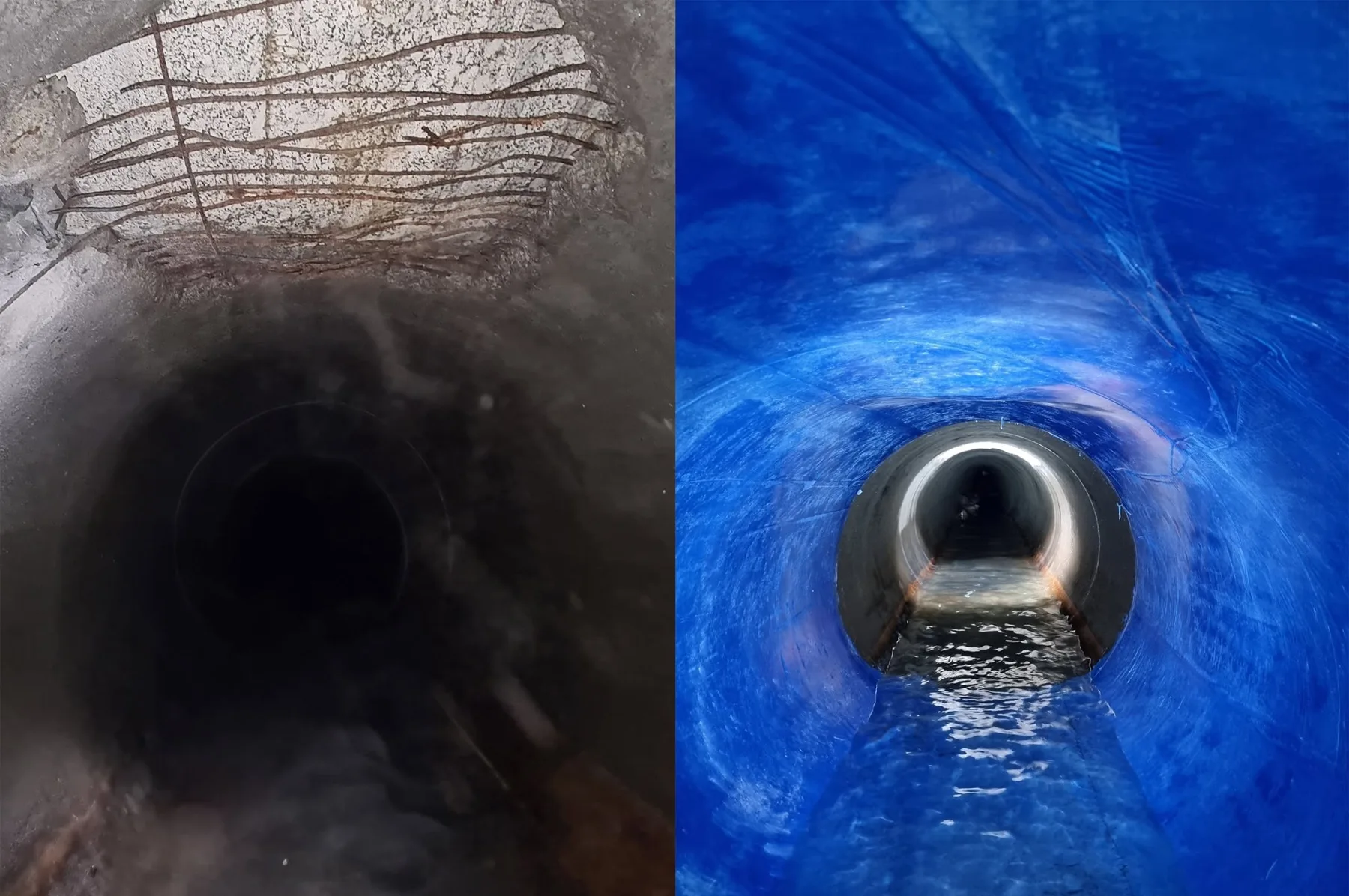
How Nuflow Blueline & UV CIPP pipe relining rehabilitates earthenware drains from within
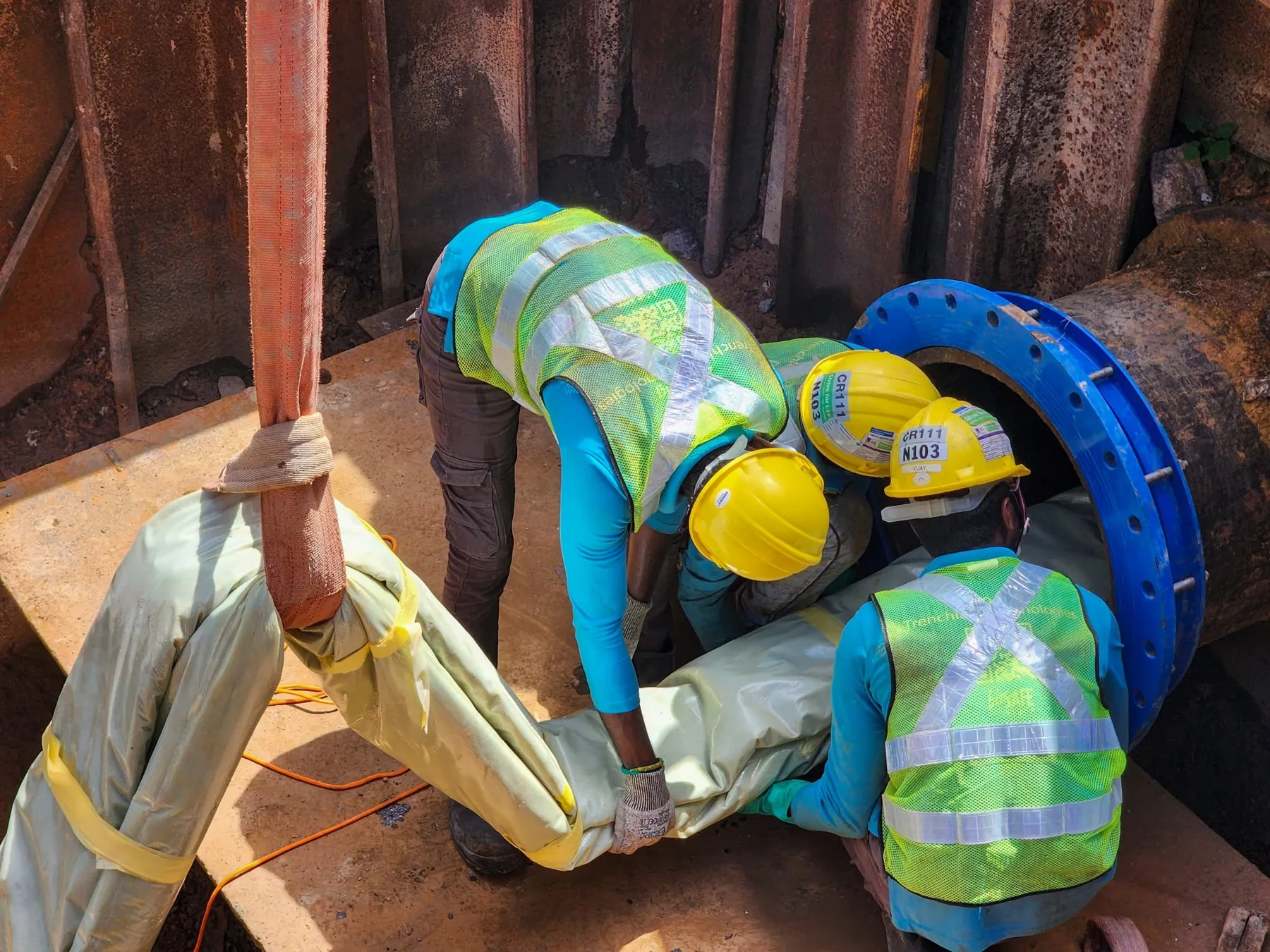
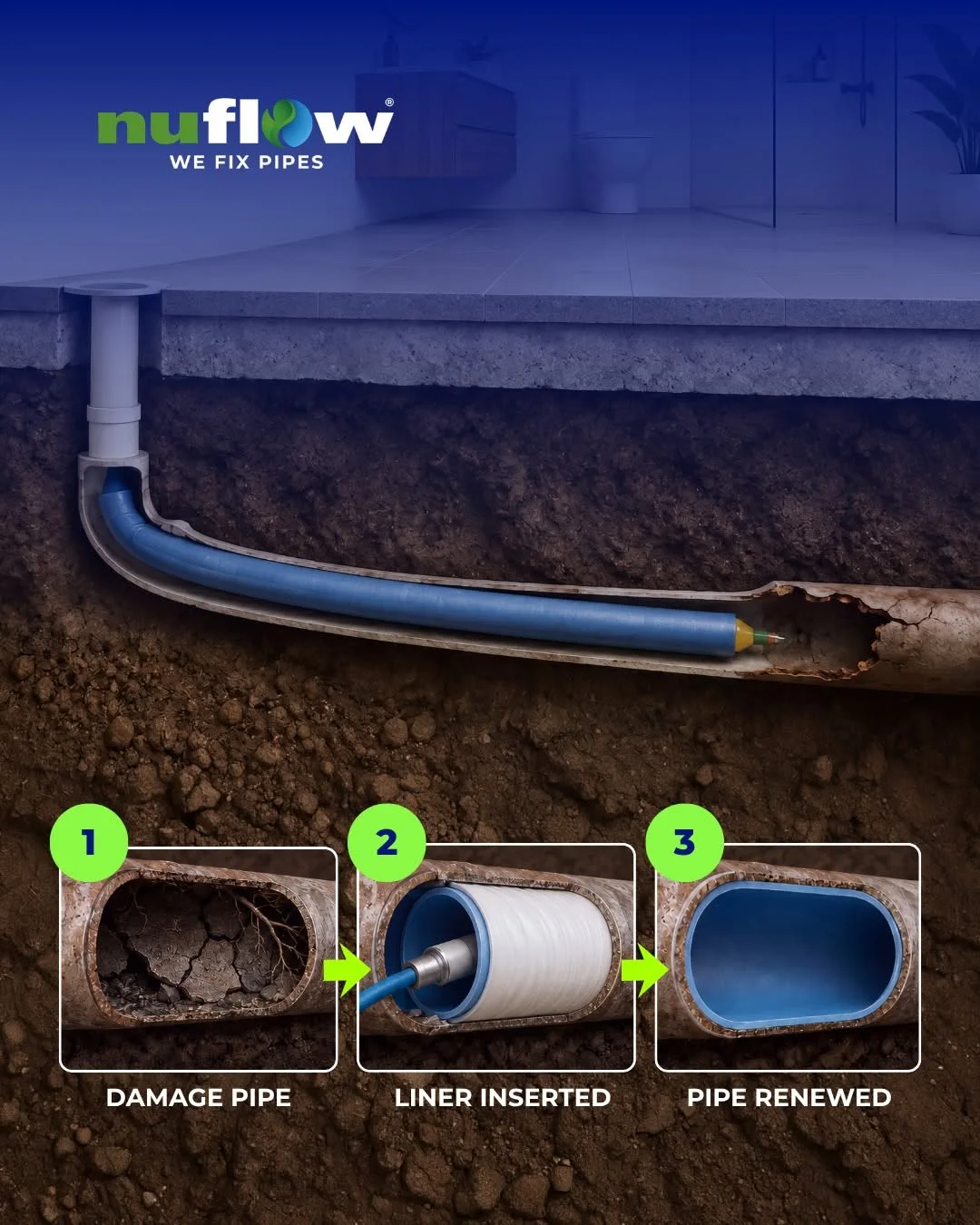
Trenchless Cured-In-Place Pipe (CIPP) relining resolves the structural failure of glazed earthenware drains by installing a seamless, jointless composite pipe directly inside the damaged clay host pipe. Instead of excavating trenches across finished landscaping, concrete driveways or bush-clad slopes, Nuflow Auckland West accesses the underground line through existing inspection openings, gully traps, rodding eyes or boundary chambers. Using Nuflow Blueline epoxy relining and UV-cured structural liner systems, we rehabilitate DN100 (100mm), DN150 (150mm) and larger earthenware networks from the inside out.
Every earthenware rehabilitation project follows a rigorous four-stage engineering protocol designed to turn a brittle, multi-jointed clay drain into a single structural pipeline with a 50-year engineered design life:
1. High-definition CCTV survey & 512Hz sonde electronic mapping
We insert a self-levelling, high-resolution drain camera to inspect the accessible clay pipeline, recording the exact metreage of every cracked socket, root entry point, displaced joint and lateral branch junction. Simultaneously, a 512Hz electronic sonde transmitter inside the camera head allows our technicians to trace the exact alignment and burial depth of the pipe at ground level.
2. Robotic root milling, hydro-jetting & protruding mortar removal
Before a liner is installed, the host clay pipe must be thoroughly cleaned and calibrated to full bore. High-pressure water jetters flush out silt, grease and loose debris, while controlled rotary chain flails and robotic cutters carefully mill away dense root masses and shave flat any hardened mortar stalactites protruding through the clay joints.
3. Custom wet-out & trenchless insertion of the resin-impregnated liner
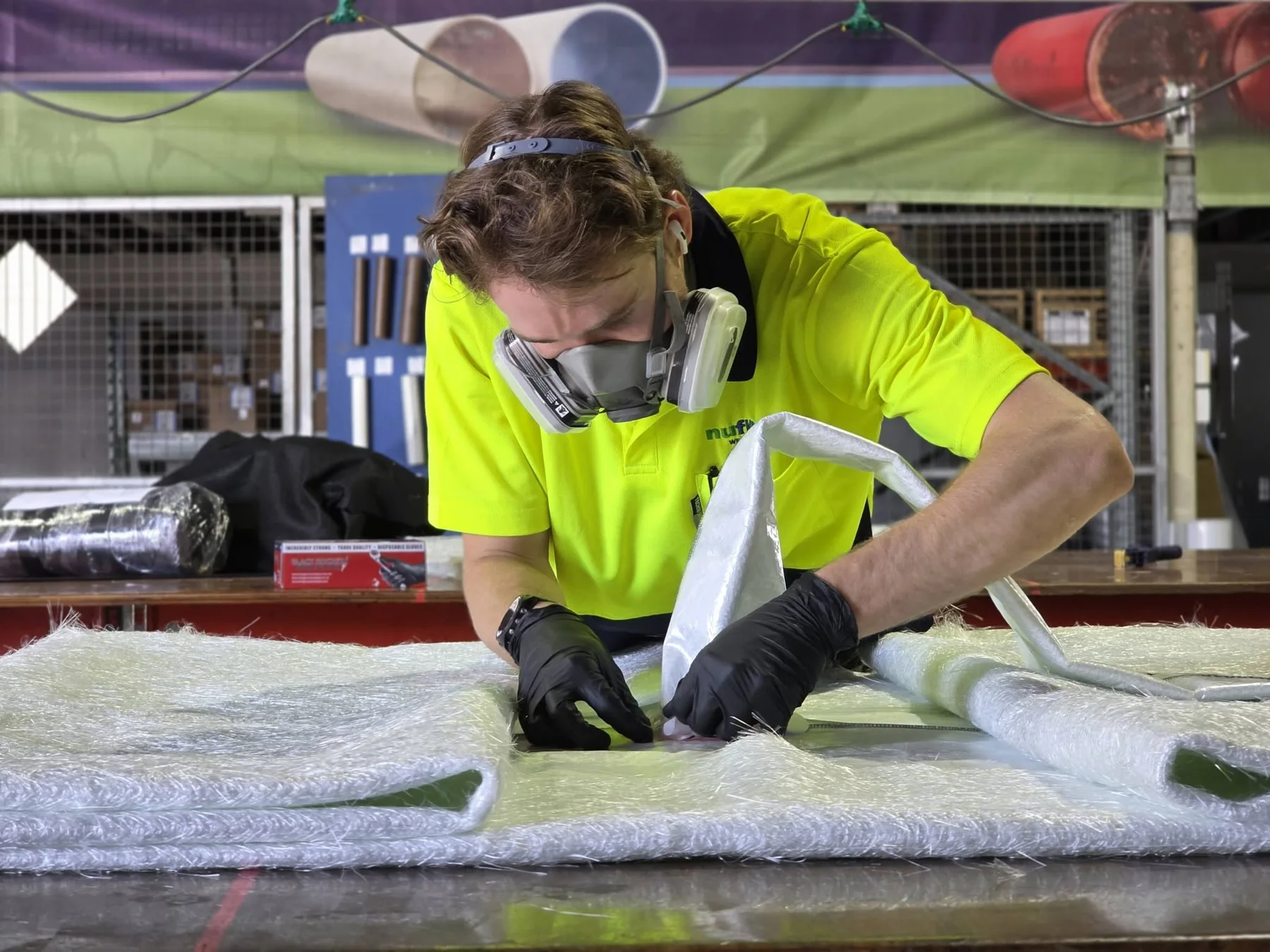
A seamless textile felt or glass-reinforced liner tube is cut to the exact repair length and saturated ('wet-out') under controlled conditions with Nuflow Blueline two-part solvent-free epoxy resin or UV-curable resin. The flexible liner is then pulled or inverted into the earthenware pipe through an existing inspection opening or gully trap without digging up the ground above.
4. Pressurised calibration curing, junction reopening & final CCTV handover
An internal calibration bladder is inflated with compressed air or water pressure, pressing the resin-saturated liner firmly against the clay pipe walls and forcing structural resin into cracks, missing socket shards and open joints. Once cured into a rigid, rock-hard structural pipe conforming to ASTM F1216, the bladder is removed, robotic cutters reopen any internal branch junctions, and a final before-and-after CCTV video is recorded for your property records.
Structural suitability: when clay pipes can be relined vs. when spot excavation is required
An honest, camera-led engineering assessment is essential before recommending trenchless relining for an older West Auckland property. Not every damaged earthenware pipe is a candidate for internal lining, and Nuflow Auckland West never proposes a one-size-fits-all solution without inspecting the line first. Suitability depends on pipe alignment, cross-sectional ovality, hydraulic gradient and whether a calibration bladder can pass safely through the damaged run.
Where a long earthenware drain has five metres of cracked, root-invaded joints beneath a reinforced concrete driveway and a single completely crushed 600mm collar beneath an accessible lawn, our team frequently engineers a hybrid repair. By performing a compact, targeted spot excavation on the lawn to replace the single crushed bend and then relining the entire remaining pipeline beneath the driveway and building footprint, property owners achieve a permanent structural rehabilitation while avoiding 90% of the excavation cost and surface destruction.
Defects well suited to internal CIPP relining
Cracked or perished sand-and-cement mortar collars; radial and longitudinal cracks in glazed clay barrels; recurring tree root intrusion through joints; minor-to-moderate joint displacements (steps up to 15–20% of pipe diameter where flow gradient remains positive); missing wall fragments where surrounding clay soil maintains the outer cavity; and leaking earthenware-to-PVC transition couplings.
Defects requiring targeted spot excavation or pipe replacement
Completely collapsed or crushed earthenware sections where ceramic shards block the bore and prevent camera or liner passage; severe structural 'bellies' (sunken sags caused by ground subsidence that hold deep standing water and reverse the hydraulic gradient); or extreme shear offsets where adjacent clay pipes have separated by more than half the pipe diameter.
NZ Building Code Clause G13 & E1, Watercare build-over rules and cross-lease drainage
Rehabilitating underground drainage in Auckland requires strict adherence to performance criteria under the New Zealand Building Code—specifically Clause G13 (Foul Water) and Clause E1 (Surface Water)—alongside AS/NZS 3500.2 (Plumbing and Drainage: Sanitary Plumbing and Drainage) and international trenchless rehabilitation standard ASTM F1216. A common technical question from architects, engineers and homeowners is whether inserting an internal liner reduces the flow capacity of a 100mm earthenware drain.
In hydraulic engineering terms, flow capacity is governed by Manning's equation, which accounts for both internal cross-sectional area and pipe wall surface roughness. While a structural epoxy CIPP liner reduces internal pipe diameter by approximately 6mm to 8mm total (3mm to 4mm wall thickness), the cured polymer interior is glass-smooth (Manning's roughness coefficient n ≈ 0.009) and completely free of protruding mortar collars, offset steps and root snags (which degrade aged earthenware to n ≈ 0.013–0.015). As a result, relined earthenware drains typically exhibit equal or superior hydraulic flow velocity and self-cleansing performance compared to the original jointed clay line.
In West Auckland suburbs such as Glen Eden, New Lynn, Henderson, Te Atatū Peninsula and Massey, many 1960s to 1980s properties sit on cross-lease titles or multi-unit subdivisions where a single earthenware drain serves two to four dwellings before connecting to the public Watercare wastewater main. Before authorising work, it is important to distinguish private shared drainage (jointly maintained by the cross-lease owners) from public Watercare infrastructure. Furthermore, in Titirangi, Laingholm and Oratia, many properties fall within Significant Ecological Areas (SEA) under the Auckland Unitary Plan, where open-trench excavation within the root protection zone of native trees can trigger costly arboricultural supervision and Resource Consent requirements. Because CIPP pipe relining operates entirely inside the existing pipe footprint from existing access points, it preserves surface root zones and avoids open-cut earthworks.
Cost comparison: earthenware pipe relining vs. open-trench excavation in West Auckland
When comparing quotes to fix a failing earthenware drain, looking only at the raw material cost of a length of PVC pipe is misleading. On a flat, bare-earth construction site, digging a shallow trench is straightforward. On an established West Auckland residential or commercial property, however, earthenware drains almost always run beneath mature gardens, exposed-aggregate or concrete driveways, timber retaining walls, garages, decks or tiled interior bathrooms. Once concrete saw-cutting, mini-excavator hire, spoil cartage, retaining wall reinstatement, driveway repouring and landscaping restoration are included, open-trench replacement frequently costs two to three times more than trenchless CIPP relining.
The table below compares internal CIPP pipe relining against traditional open-trench excavation for a typical pre-1980s West Auckland earthenware drainage repair:
Earthenware Pipe Relining vs. Open-Trench Excavation in West Auckland
Comparison of technical performance, site disruption and total cost factors for pre-1980s DN100/DN150 earthenware drainage repairs.
| Assessment Factor | Nuflow Trenchless CIPP Relining (Blueline / UV) | Traditional Open-Trench Excavation & Replacement |
|---|---|---|
| Surface & Property Disruption | Minimal to zero digging; installed via existing inspection openings, gullies or a compact access point. | Heavy excavation; requires saw-cutting concrete driveways, demolishing paths, decks or retaining walls. |
| Typical On-Site Timeframe | Usually completed within 1 day (4 to 10 hours for standard residential runs); drains return to service the same day. | Typically 3 to 7+ days including trenching, pipe laying, backfilling, compaction and concrete curing. |
| Driveway & Landscape Reinstatement | Avoided on most jobs, saving $3,500–$18,000+ in concrete repouring, paving and garden restoration. | Substantial additional cost for concrete contractors, tilers, fencing and replacement planting. |
| Waitākere Protected Trees & Root Zones | Non-invasive; rehabilitates pipes inside the existing bore without severing structural tree roots above. | Trenching through root protection zones can damage native trees and trigger Auckland Unitary Plan consent rules. |
| Joints & Future Root Resistance | Forms a 100% seamless, jointless monolithic pipe that bonds tightly to the host wall and blocks root entry. | New uPVC pipe uses elastomeric ring-seal joints every 3m–6m and requires transition couplings to any remaining clay. |
| Structural Strength & Design Life | Engineered to ASTM F1216 structural standards; backed by Nuflow Auckland West's advertised 50-year guarantee. | New uPVC pipe is durable, but disturbed trench backfill in reactive clay soil can settle unevenly if poorly compacted. |
| Hydraulic Flow Performance | Ultra-smooth polymer bore (Manning's n ≈ 0.009) eliminates mortar snags and dropped-lip turbulence. | Smooth PVC bore, though transition couplings to older unlined clay sections can remain catch points. |
| Total Project Cost (TCO) under Hard Landscaping | Typically 35% to 65% lower total cost when pipes run beneath driveways, slabs, walls or established gardens. | High indirect costs driven by demolition, spoil disposal, heavy machinery access and surface reinstatement. |
Pre-purchase & pre-renovation earthenware drain checklist for West Auckland property owners
One of the costliest mistakes West Auckland home buyers and renovators make is assuming that a standard pre-purchase building inspection covers underground drains. Standard residential property inspections conducted under NZS 4306 assess visible building elements and briefly run indoor taps, but they do not place a CCTV camera inside buried earthenware wastewater or stormwater lines. A cracked clay drain that has been freshly hydro-jetted prior to open homes can flow normally during a 15-minute tap test, only to block with tree roots or overflow three months after settlement.
Similarly, homeowners in Henderson, New Lynn, Titirangi and Te Atatū frequently invest $30,000 to $80,000 in new concrete driveways, architectural landscaping or bathroom renovations directly over 60-year-old salt-glazed clay pipes without checking their internal condition first. Use the following practical checklist before purchasing a pre-1980s property, pouring new concrete, or comparing drainage repair quotes:
7-Point Earthenware Drain Checklist for West Auckland Homeowners & Buyers
Complete these verification steps before buying a pre-1980s West Auckland property, pouring a new driveway, or approving a drainage repair quote:
- Check the property build era (pre-1980s benchmark): If the dwelling in Henderson, New Lynn, Glen Eden, Titirangi or Te Atatū was built before 1982 and has no documented record of full drain replacement, assume the underground foul water and stormwater lines are salt-glazed earthenware.
- Commission a dedicated pre-purchase CCTV drain inspection: Do not rely on a standard building report tap test. Book a recorded CCTV drain survey with 512Hz sonde locating to inspect every metre of accessible wastewater and stormwater pipework prior to going unconditional.
- Inspect before pouring concrete driveways or building extensions: Always camera-inspect and reline aged earthenware pipes running beneath proposed driveway pours, garage conversions, decks or retaining walls before construction locks those pipes beneath expensive new surfaces.
- Distinguish clearing quotes from structural repair quotes: When a drain blocks, confirm whether the contractor is quoting only to hydro-jet/cut roots (temporary symptom relief) or to structurally seal the cracked earthenware entry points via CIPP relining.
- Verify cross-lease & Watercare asset boundaries: Check your Auckland Council GIS / Watercare drainage plan to confirm whether the damaged earthenware section is a private lateral, a shared cross-lease drain, or a public Watercare main.
- Confirm full-length vs. sectional patch relining scope: Ask whether the proposed quote covers a short 1-metre Blueline patch over an isolated fracture or a continuous structural liner spanning multiple root-affected clay collars.
- Request before-and-after CCTV footage and written warranty terms: Ensure your contractor provides post-cure CCTV inspection video proving smooth liner calibration and reopened junctions, alongside written documentation of the 50-year system guarantee.
Arrange an earthenware drain inspection and relining assessment in West Auckland
Whether you are dealing with a drain that keeps blocking every few months, planning a pre-purchase CCTV drain inspection on a 1960s West Auckland home, or looking for a trenchless alternative to digging up your driveway, Nuflow Auckland West provides clear, camera-led engineering advice. Operating from our St John base and servicing all 30 West Auckland locations—including Titirangi, Henderson, New Lynn, Glen Eden, Green Bay, Te Atatū Peninsula, Te Atatū South, Massey, Oratia, Swanson and Hobsonville—our team combines Certified Plumber accreditation (ID #16008) with over two decades of industrial and residential pipe rehabilitation experience.
We begin by inspecting the accessible earthenware line with high-definition CCTV equipment, mapping the exact location and severity of cracked collars, root intrusions or displaced joints, and providing you with recorded footage and a transparent written scope. Where Nuflow Blueline or UV-cured relining is suitable, our structural pipe relining systems are backed by Nuflow Auckland West's advertised 50-year guarantee (subject to written system terms provided with your quote). Call our local team on 027 488 1911 or request an assessment online to get your earthenware drains permanently sorted.
Frequently asked questions
Can old salt-glazed earthenware clay pipes be relined instead of dug up?
Yes. Provided the earthenware pipe has not completely collapsed and retains a workable hydraulic gradient, trenchless CIPP relining is one of the most effective ways to rehabilitate pre-1980s clay drains. The epoxy or UV-cured liner bonds across cracked mortar collars, missing ceramic shards and minor joint offsets to form a continuous, root-proof structural pipe inside the old clay host.
Will pipe relining stop tree roots from growing back into my clay drains?
Yes, across the relined section. Tree roots enter earthenware drains through cracked mortar collars and displaced spigot-and-socket joints. Once existing roots are milled out and a seamless Nuflow Blueline epoxy liner is cured across those joints, the entry points are structurally sealed, preventing roots from penetrating the rehabilitated section.
Does relining a 100mm earthenware pipe reduce its drainage flow capacity?
No—in practice, hydraulic flow velocity typically improves. Although a structural CIPP liner has a wall thickness of approximately 3mm to 4mm, its cured polymer surface is ultra-smooth (Manning's roughness coefficient n ≈ 0.009) and eliminates the rough mortar ridges, open joint steps and root filaments that slow wastewater down inside aged earthenware pipes.
Can you reline a single damaged clay joint, or do you have to reline the whole drain?
Both options are possible depending on what the CCTV inspection reveals. If a clay drain has an isolated fracture or a single leaking clay-to-PVC transition joint while the rest of the line is sound, we can install a targeted sectional Blueline patch liner. If mortar collars have perished and roots are entering at multiple joints along a run beneath a driveway or bush slope, continuous full-length relining is more cost-effective and prevents roots simply moving to the next unlined collar.
How long does earthenware pipe relining take at a West Auckland home?
Most residential earthenware pipe relining installations in West Auckland—including robotic root removal, high-pressure hydro-jetting, CCTV verification, liner installation, curing and final camera handover—are completed within a single day (typically 4 to 10 hours on site), allowing household drains to return to normal use that same evening.
What warranty applies to relined earthenware pipes?
Nuflow Auckland West advertises a 50-year guarantee on Nuflow structural pipe relining systems, installed by our Certified Plumber team (ID #16008). We provide full before-and-after CCTV inspection footage and confirm the written warranty terms and coverage for your specific pipeline with your quote.
Ask about your property
Every pipe and property is different. Contact our team to discuss your situation, or explore pipe relining, drain clearing, tree root removal and CCTV inspection across West Auckland.