
Why do drainage problems appear when it rains?
Heavy rain increases the amount of water that needs to drain away from a property. A stormwater pipe that seems to cope during light showers may struggle when rainfall increases, particularly if there is a restriction or damage. However, overflowing water does not automatically mean that a pipe has cracked or needs relining. The cause may involve the inlet, the private drain, available drainage capacity or the wider network. For West Auckland homeowners, the important first step is to identify where the water is coming from and arrange an assessment when conditions are safe.
Stormwater and wastewater are different systems
Stormwater is rainfall runoff, while wastewater comes from fixtures such as toilets, showers, sinks and washing machines. Watercare explains that most Auckland areas have separate stormwater and wastewater networks, although some older areas use combined systems. Rainwater entering a wastewater network can contribute to overloading and overflows. This distinction matters when reporting a problem: an overflowing outdoor rainwater drain and a backing-up toilet are not necessarily the same issue. Describe what you can see rather than assuming which network is responsible.
Can heavy rain reveal an existing pipe problem?
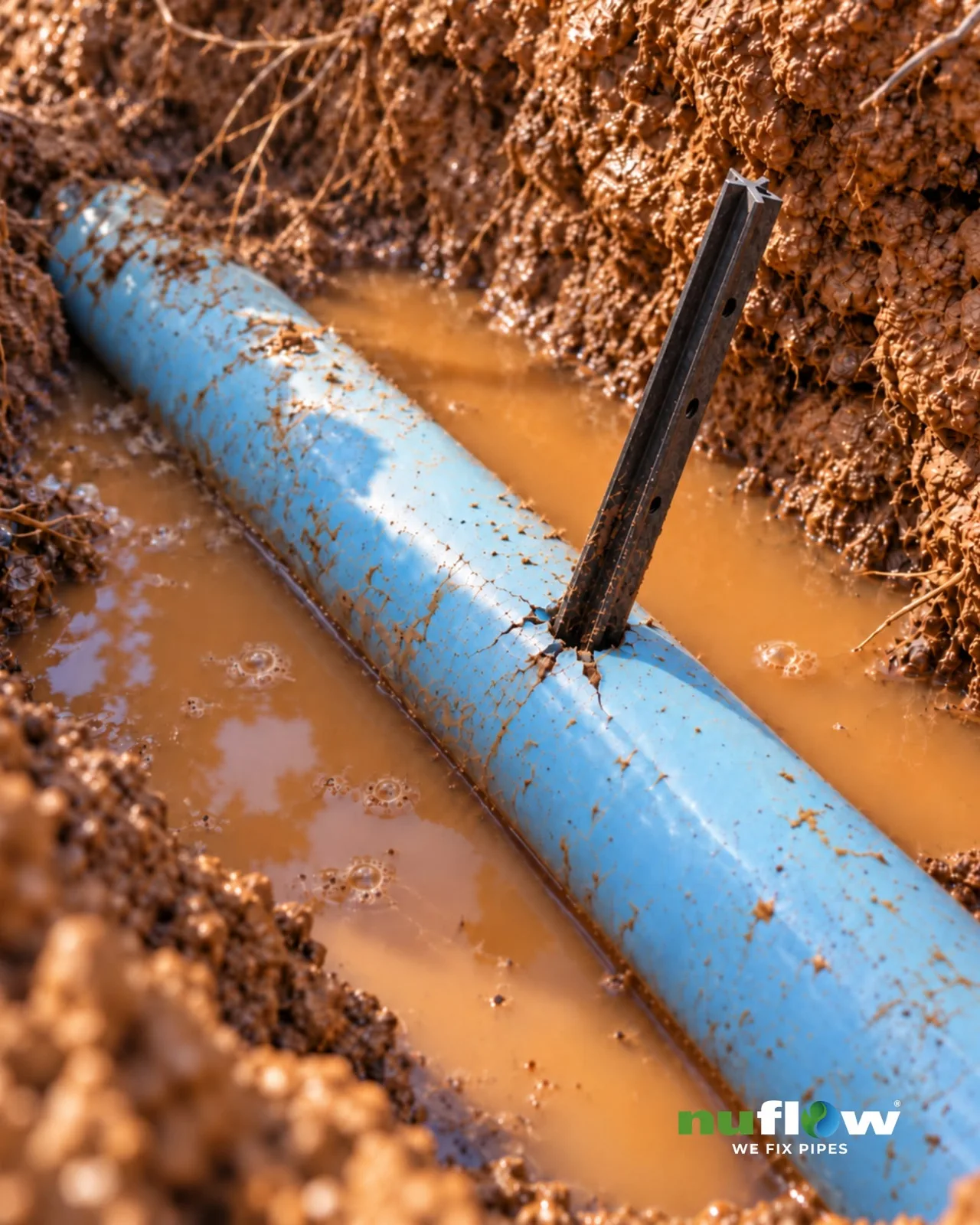
Yes. Nuflow notes that broken stormwater pipes or restrictions such as root intrusion may go unnoticed until heavy rainfall causes an overflow. Rain can therefore make an existing problem more obvious, rather than being proof that the weather has just damaged the pipe. If the same area repeatedly floods, keep a record of where water collects and how quickly it recedes after the rain. That history can help frame an investigation. Ask the drainage team what needs to be checked before deciding whether clearing, repair or another drainage solution is appropriate.
What should you check before wet weather?
When conditions are safe, look for leaves and loose debris covering accessible ground-level drain grates. Arrange appropriate maintenance for gutters and other drainage components that you cannot reach safely. Keep known access points accessible so a contractor can inspect them if needed. These basic checks do not establish the condition of underground pipework, but they can identify obvious maintenance needs. Do not climb onto a wet roof or open underground chambers to investigate. If a drain has a history of overflowing, discuss it before the next heavy rainfall rather than relying on surface cleaning alone.
What information helps when a drain overflows?
From a safe, dry location, note which drain or area is affected, whether the problem happens only during rain and whether indoor fixtures are also behaving differently. Photos taken without entering floodwater may help explain the location later. Record any previous clearing or repair work and whether neighbouring properties appear affected. Do not enter floodwater or attempt to open covers during an overflow. If you suspect a public wastewater issue, report it to Watercare; public stormwater concerns should be reported to Auckland Council. An assessment can help clarify private drainage concerns.
When is a CCTV drain inspection useful?
A CCTV inspection may help investigate the visible condition of accessible pipe sections when an underground fault is suspected. Ask whether conditions permit a useful inspection, whether cleaning is needed first and which parts of the drain can be assessed. Footage should be interpreted alongside the symptoms and site information. A camera cannot, by itself, explain every source of surface flooding or prove that the wider network has enough capacity. The aim is to answer a specific question about the pipe and identify what further investigation, if any, is needed.
Will pipe relining stop flooding?
Relining can be considered for suitable damaged pipework, but it is not a general cure for flooding. A repair recommendation needs to relate to an identified defect. Ask what the proposed work is expected to resolve and what factors sit outside its scope, such as a separate surface-water issue or wider network conditions. Where relining is suitable, discuss access, preparation and final checks. Avoid assuming that repairing one pipe guarantees the property will never flood during severe weather. Understanding the limits of the proposed repair is part of making an informed decision.
Arrange a drainage assessment in West Auckland
If rain repeatedly reveals a problem at your property, contact Nuflow Auckland West with your suburb, a description of the affected area and any previous inspection reports. Tell the team whether the issue is ongoing or has cleared after the weather improved. We can discuss the appropriate next step for a private drainage assessment and confirm appointment availability. Normal hours are Monday to Friday, 8 am to 5 pm, with after-hours and emergency work available on request. Call 027 488 1911 to discuss your property.
Frequently asked questions
Why does my outdoor drain overflow only in heavy rain?
Higher rainfall can reveal a restriction or a capacity issue that is less obvious during light rain. An assessment is needed to distinguish an inlet blockage, damaged pipe or other drainage problem.
Does an overflowing stormwater drain always need relining?
No. Relining is an option for suitable damaged pipes. The cause of the overflow needs to be established before recommending cleaning, repair or another approach.
Who should I contact about a public drainage problem?
In Auckland, report public wastewater problems to Watercare and public stormwater concerns to Auckland Council. For an assessment of private drainage at your property, contact our team to discuss the situation.
Ask about your property
Every pipe and property is different. Contact our team to discuss your situation, or explore pipe relining, drain clearing and CCTV inspection.